

What is PORA Doing On Sun City West Water Issues
Meeting With Utility, County, State Government Officials
PORA actively meets with utility providers, county leaders, state agencies, and elected officials to represent the interests of Sun City West residents. These meetings provide opportunities to discuss important issues such as water, electric rates, transportation, development, and public policy, ensuring our community’s voice is heard before key decisions are made.

Educating The Community
The Committee serves to promote a culture of wise and conservative use of water.
The committee is made up of representatives from SCW clubs, organizations, and operations who share the common denominator of water use, and others such as EPCOR (Edmonton Power Corporation). The Committee meets on as-needed basis to share information, to discuss of issues of common interest, and to entertain the occasional presentation. Meetings are open with dates and times posted in the PORA E-News.

Community Event (All Are Welcome)

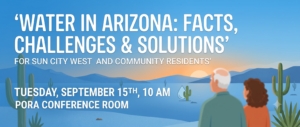
The PORA water committee meets quarterly. The committee consists of knowledgeable individuals from Sun City West, CAP and Epcor. Meetings are open to the public and are scheduled on third Tuesday.
Discussion items of interest to the committee members and Sun City West residents might be:
Where does our water come from; for our homes; for our golf courses?
Note that our water is 100% supplied by wells within the community.
Thanks to Del Webb’s vision, there are 9 wells, one for each of the golf courses,. Seven are operated by the Recreation Center and there is one public course and one private course in SCW. Additionally, Epcor operates 10 wells to serve as supply for our domestic use. Some of the older wells were formerly used for agriculture in the area and others were drilled later, specifically for the intended use.
These wells are approximately 1000 feet in depth and supply water from a large aquifer located at approximately 600’ from the surface. Presently all are operating at sufficient rates to meet the requirements of the community.
Who uses our water?
The same drinking water system supplied by EPCOR serves homes and businesses, while golf courses generally use separate permitted groundwater supplies, helping reduce demand on the potable water system.
Where is my water meter and how do I read it?
Where is my water meter?
Your water meter is typically located near the front property line, usually in a rectangular ground box with a removable lid marked “Water” or “EPCOR.”
How do I read it?
Lift the lid and read the numbers on the meter from left to right. The large numbers represent the total amount of water used (in gallons or cubic feet, depending on the meter). To track your usage, record the reading and compare it to a later reading. If all water is turned off and the meter is still moving, you may have a leak.
What is “Fugitive Water"?
FUGITIVE WATER What is “Fugitive Water?”
Fugitive Water means the pumping, flow, release, escape, spray, or leakage of water from any pipe, valve, faucet, connection, diversion, well, or any other device onto adjacent property or the public right-of-way.
Are you guilty of providing fugitive water to our environment?
If you are, consider this: all water provided for Sun City West comes from pumping from an aquifer located below our community. This aquifer is large, but it is continually being drained and will not last forever. Be a Steward of Water Conservation
Please be a steward of water conservation in Sun City West by taking some or all the following suggestions:
What you can do to save water If you want to reduce your water consumption or just make your home more efficient and save some money at the same time, read on:
Tips to reduce water wastage
• Check your toilet for leaks regularly.
• Install a low flow shower head
• Replace older faucet aerators with new water efficient ones
• Install a high efficiency toilet.
• Turn off the tap while brushing your teeth or shaving.
• Take a short, five-minute shower instead of a bath.
• Check your irrigation system. Look for leaks and avoid over-watering resulting in a FUGITIVE WATER situation.
• Get drought-conscious. Consider planting drought-tolerant plants and consider removal of non-essential grass areas.
• Use a cover to prevent evaporation from your pool or hot tub.
• Regularly check pipes, hoses and connections for leaks.
• Ensure the placement of your sprinkler waters your lawn, not your driveway or the street (FUGITIVE WATER).
• Use drought-resistant grasses like Bermuda instead of traditional Kentucky bluegrass, and avoid over-seeding in the winter. • Use a broom to sweep sidewalks, not a hose.
• Don’t leave the water running while washing your car, boat or RV. Always use a spray nozzle.
Finally, if you are considering a large water loss operation such as draining a swimming pool, remember the county recommends the water should remain on your property, not on the street, etc.
A good solution is to utilize the wastewater clean out piping on your property to send water into the Epcor wastewater system. There it will be collected, treated and sent to aquifer recharge ponds.
For more information about water issues in Sun City West, please contact PORA at 623-584-4288 and leave a message.
What is Desalination?
What Is "Pure Water Phoenix" Initiative
Material for Water Committee
Targeted groundwater storage to combat drought and flooding
A research team led by hydrogeologist Thomas Baumann from the Technical University of Munich has developed a “Smart Storm Water Storage” device to tackle groundwater depletion.
“Our idea was to combine flood protection with drought prevention,” said Lea Augustin, another hydrogeologist working with Baumann.
The facility is located in a hilly hop-growing region about 60 kilometers (about 40 miles) north of Munich, where heavy rainfall frequently causes flooding, and where groundwater is significantly depleted for drinking water and irrigation.
The water storage project works by first collecting water in a retention basin during heavy rain. It is then purified, and pollutants are removed. The clean water then flows through pipes to so-called infiltration wells that channel it about 30 meters (100 feet) deep into the ground. As the groundwater level rises, the water can be pumped back up via wells.
Groundwater does not evaporate
The Namibian capital, Windhoek, is also working to replenish groundwater. The city is located in the country’s arid highlands where rainfall is scarce. By the late 1960s, the groundwater was already considered overexploited.
At the time, Windhoek responded by becoming one of the world’s first cities to convert wastewater into drinking water.
And since 2002, infiltration wells have been used to channel this treated water into the ground. Water sourced from sometimes distant reservoirs is also used to replenish groundwater.
The advantage is that far less water evaporates underground compared to open reservoirs, allowing better retention of scarce water resources.
California relies on groundwater storage
More and more groundwater remediation techniques, sometimes known as managed aquifer recharge, are being developed worldwide.
These include the redirection of excess rainwater or floodwater into ditches or large basins before it slowly seeps into the ground. The method is less expensive than technical systems but requires a lot of space. It also takes longer for the water to reach the aquifer.
Such infiltration basins exist in numerous worldwide locations, including along the San Gabriel River in the Los Angeles metropolitan area.
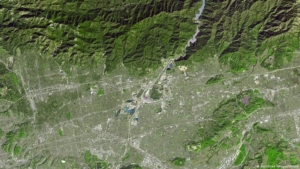
Dams and groundwater recharge basins were constructed along the San Gabriel River© Stocktrek Images/IMAGO
The drought-stricken US state of California views aquifer recharge as a key strategy for coping with climate-related weather extremes, according to the state water agency. In 2023 alone, more than 4.1 million acre-feet of water — equivalent to more than 5 billion cubic meters — was injected into aquifers, the agency told DW.
Flooding fields to increase groundwater
Another option is the targeted flooding of agricultural land when extreme rain threatens, allowing floodwaters to be captured and directed into the groundwater. The advantage: The land can continue to be used for agriculture after the water has seeped away.
Since farmland and pastures account for about 40% of the world’s land area, this method has great potential. However, it only works under certain conditions.
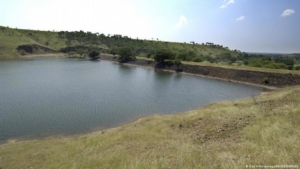
India is among the countries using percolation tanks for water storage© Dad Fotos/imageBROKER/IMAGO
The plants must not be damaged. Furthermore, no pollutants or pathogens from the floodwaters must enter the groundwater, making implementation difficult.
River restoration replenishes groundwater levels
Nature itself can also help. When rivers are restored, they expand. They can then spread out during floods, creating shallow side channels and pools.
These capture floodwater, some of which also seeps into the ground. Floodplain microorganisms also filter the water, meaning the process both replenishes and purifies the groundwater.
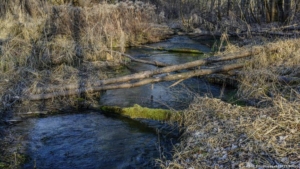
Restoring rivers can help since they can spread out during floods, creating shallow side channels and pools© Joachim Stingl/imageBROKER/IMAGO
At the same time, the risk of flood damage decreases.
Harvesting groundwater directly from rivers or lakes
In Germany, drinking water is often obtained indirectly from rivers through a process known as bank filtration.
Here, groundwater is pumped out of wells located near rivers or lakes, creating a vacuum. Water from the river then flows in to replace it. As it passes through the ground, it is naturally filtered. Bank filtration provides more than half of Berlin’s drinking water.
Infiltration weirs also channel river water into the groundwater. These are structures in the riverbed that reduce the flow velocity, or temporarily dam up the river. When the water flows more slowly, more of it can seep into the ground.
In arid regions such as Kenya, small so-called sand dams are constructed at several points along the river’s course. They are designed to retain the sand that rivers carry during the rainy season. The resulting layer of sand at the dams serves as an additional aquifer, further filtering the water as it seeps through the gaps in the sand into the groundwater.
Through wells downstream, the groundwater is then drawn up even during dry seasons. Here, too, groundwater storage results in significantly less loss through evaporation than with aboveground storage. This benefits people, animals and vegetation, which recovers when the groundwater level rises.
Free Classes: Surprise Xeriscape Garden Classroom
In front of Surprise City Hall Offices
Sponsored by Epcor
Thursday July 30 6 PM – 7:30 PM
Cultivating Native Edibles
Surprise Xeriscape Classroom
Thursday August 6 – 6-7:30 PM
Vegetable Gardening in the Low Desert
Saturday August 8 –9-10:30 AM
Eye Catching Plants for the Desert
Saturday August 29 9-10:30 AM
Landscape design for reduced maintenance
Saturday September 5 9-10:30 AM
Troubleshooting Common Home Water Leaks
Saturday September 19 9-10:30 AM
Growing Roses in the Desert
Saturday, September 26th 9-10:30 AM
Irrigation maintenance, troubleshooting and Repair
Watering By The Numbers
These questions and mannnnny others like,
- Where does our water go?
- Reporting “Fugitive Water”
- There is a question about my water bill.
- How do I check for water leaks on my property?
- Will it help to replace turf with desert rock?
- What type of plants can I use to reduce water needs?
- Are any water system maintenance or upgrade projects scheduled soon?
- Others
The meetings involve reviews and information exchange between the committee members and guests.
If you have a question or information concerning anything related to water in or about our community, please attend our meetings or submit a note to the PORA office and the committee will review and respond as soon as possible.
See you at the next Water Committee meeting at
PORA
13815 W. Camino del Sol, Sun City West.